Religious Education
Religious Education at St Paul's
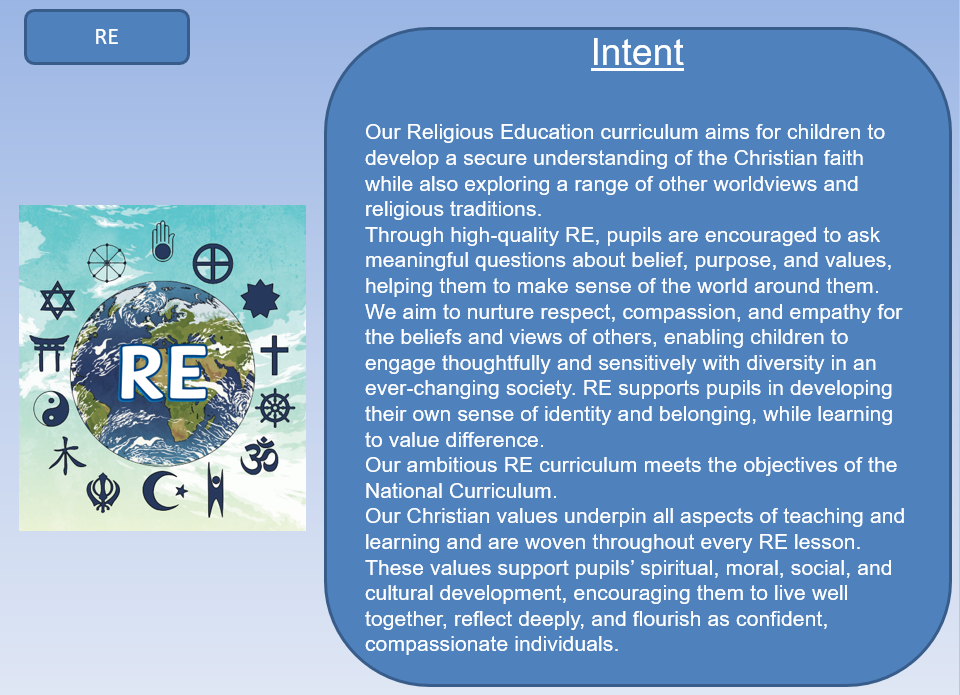
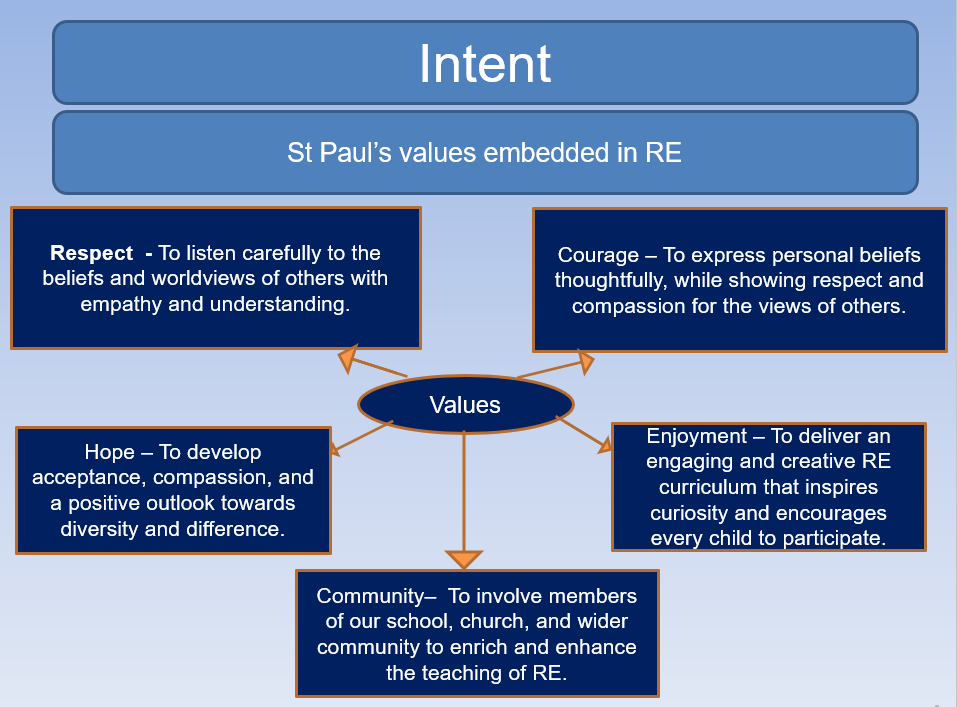
Religious Education at St Paul’s is taught in line with the Buckinghamshire Agreed Syllabus and delivered through the Oxford Diocesan Board of Education (ODBE) Scheme, alongside Oak National Academy resources, reflecting the Church of England Statement of Entitlement. Our RE curriculum is rooted in our Christian values and supports children to develop understanding, respect, and curiosity about faith and belief.
In the Early Years Foundation Stage, children explore spiritual and moral ideas through stories, celebrations, and cross-curricular learning linked to the Early Learning Goals. They learn about belonging, special times, and important experiences in their own lives and in the wider community, supported by practical resources and storytelling.
At Key Stage 1, pupils study Christianity, Judaism, Islam, and Hinduism, learning through big questions that encourage reflection and discussion. They explore themes such as belonging, special places, stories, leaders, festivals, and creation, helping them to understand similarities and differences between faiths.
At Key Stage 2, pupils study Christianity, Islam, Hinduism, and Humanism. Learning is organised around half-termly big questions which develop religious literacy and understanding of different worldviews, and encourage pupils to think deeply about belief, values, and ways of life.
Across all key stages, Religious Education at St Paul’s promotes respectful dialogue, compassion, and reflection, enabling children to understand their own beliefs while valuing and respecting the beliefs of others.
Right to Withdraw
Pupils may be withdrawn from RE or part of RE by a parent or guardian (or withdrawing themselves if they are aged 18 or over) in accordance with Schedule 19 to the School Standards and Framework Act 1998; teachers can also exercise their right to withdraw from teaching the subject.
Parents have the right to withdraw their children from RE on the grounds that they wish to provide their own RE. This provision will be the parents’ responsibility. This right of withdrawal exists for all pupils in all types of school, including schools with and without a religious designation. Students aged 18 or over have the right to withdraw themselves from RE. Parents also have the right to withdraw their child from part of RE and can do so without giving any explanation. Teachers also have the right to withdraw from the teaching of RE. However, this does not apply to teachers who have been specifically employed to teach or lead RE. If a teacher wishes to withdraw from the teaching of RE, a letter requesting this must be submitted to the head of the school and its chair of governors. If a teacher withdraws from the teaching of RE, the school must still make provisions for the pupils to receive their entitlement to RE.
When a request to withdraw is received by a school, the request should be granted without delay. The school may offer to speak with the parent to try to understand the basis for the withdrawal but only after the request has been granted. The school must make clear that the parent’s right to withdraw their child has been granted and that parents are not required to give reasons for their request.
Should parents take up the offer of a discussion, the school may seek to establish the religious issues about which the parent objects to their child being taught. Discussion may include the practical implications of withdrawal and the circumstances in which it may be reasonable to accommodate their wishes. Practical examples of how a school may reassure a parent who has withdrawn their child may include inviting the parent to observe a RE lesson, discussing curriculum documents and discussing the aims of RE in the school with them.
Religious Education Intent at St Paul's